Introduction
China remains the world's largest producer and exporter of paper cups and paper packaging, supplying over 60% of global demand. For importers, distributors, and brand owners, understanding the shipping process from China is essential for cost control, timely delivery, and smooth customs clearance.
The global paper cup market is projected to reach USD 2.8 billion in 2026 and grow to USD 9.9 billion by 2036 (CAGR 4.5%). With this growth comes increasing demand for efficient, cost-effective shipping solutions. Located in Ningbo, China �?one of the world's busiest ports �?Salon Paper ships to over 30 countries worldwide. This guide draws on our logistics experience to help you navigate the shipping process.
1. Shipping Methods: Sea Freight vs. Air Freight vs. Express
Your choice of shipping method depends on order volume, urgency, and budget. Here is a detailed comparison:
| Method | Best For | Transit Time | Cost (per CBM) | MOQ |
|---|---|---|---|---|
| Sea freight LCL | 1�?5 CBM | 25�?5 days | $50�?20 | 1 CBM |
| Sea freight FCL | 16+ CBM | 25�?5 days | $30�?0 | 20GP/40HQ |
| Air freight | Urgent orders | 5�?0 days | $3�?/kg | 100 kg |
| Express (DHL/FedEx) | Samples | 3�? days | $8�?5/kg | 1 kg |
Sea Freight �?The Standard Choice
Sea freight is the most economical method for shipping paper products. Paper cups are lightweight but bulky, making volumetric weight the primary cost factor.
- LCL (Less than Container Load): For orders of 1�?5 CBM. Your goods share container space with other shipments. Cost-effective for small-to-medium orders.
- FCL (Full Container Load): 20GP (28 CBM) or 40HQ (68 CBM) containers. Recommended for orders exceeding 15 CBM. Lower per-unit cost and reduced handling damage risk.
Air Freight �?For Urgent Orders
Air freight is 5�?x more expensive than sea freight but offers significantly faster delivery. For paper products, the high volume-to-weight ratio means you pay for dimensional weight (length × width × height / 6000).
Express Courier �?For Samples and Small Orders
DHL, FedEx, and UPS offer door-to-door service for samples and small orders under 100 kg. Transit time is 3�? business days to most countries.
2. Understanding Incoterms for Paper Cup Imports
Choose the right Incoterm to match your logistics capability. These are the most common for paper packaging imports from China:
| Incoterm | Seller's Responsibility | Buyer's Responsibility | Best For |
|---|---|---|---|
| FOB Ningbo | Factory to port, loading | Ocean freight, insurance, customs | Experienced importers |
| CNF / CIF | Factory to destination port | Customs clearance, delivery | First-time importers |
| DDP | Everything to buyer's door | Nothing (unload only) | Hassle-free buying |
FOB Ningbo is our most commonly used Incoterm. It gives buyers control over freight costs while leaving production and port loading to us. For buyers who prefer a simpler process, CIF or DDP are excellent options.
3. Packaging for Export �?Protecting Your Products
Proper export packaging prevents damage and reduces shipping costs. Paper cups are lightweight but can be crushed if poorly packed.
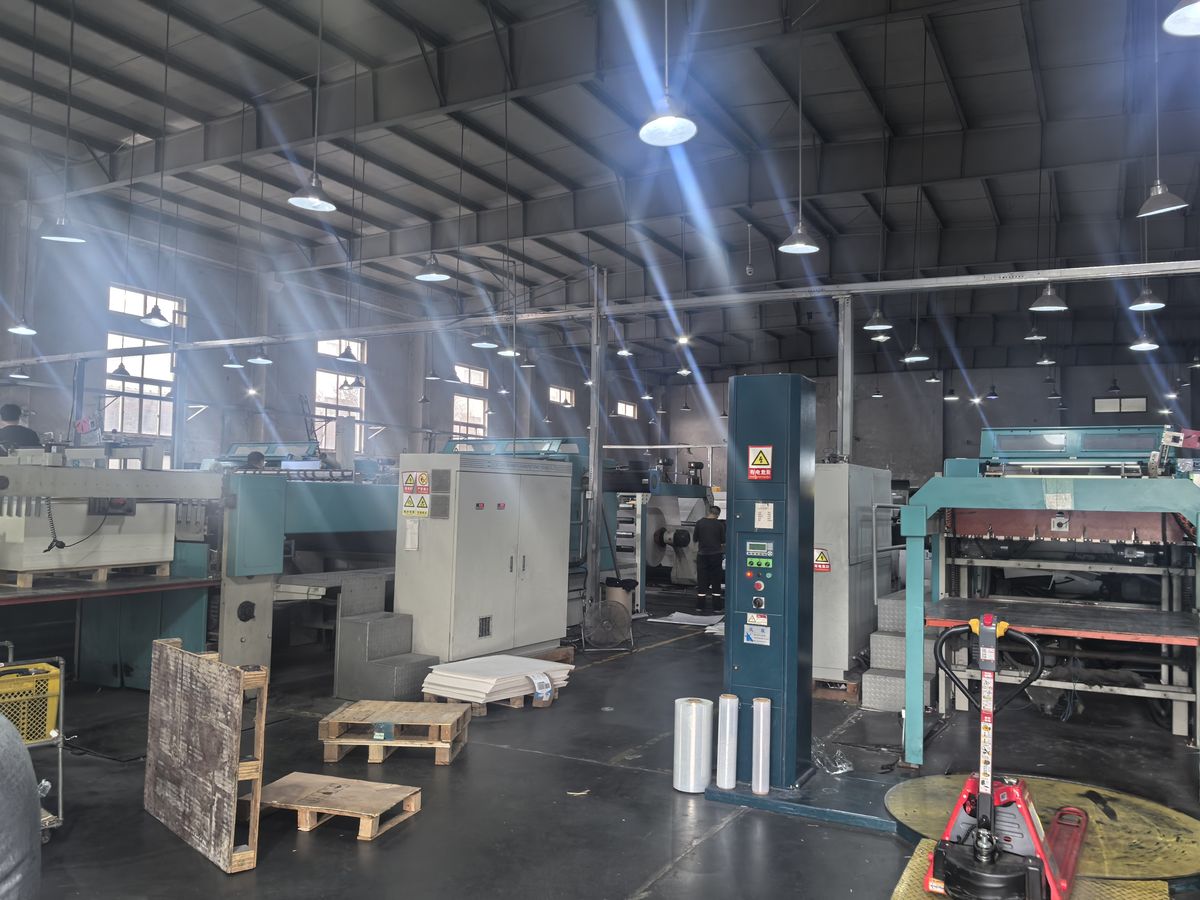
Standard Export Packaging:
- Inner packaging: Cups are sleeved in polybags (50�?00 pieces per sleeve) or shrink-wrapped in bundles
- Master cartons: Standard is 5-ply corrugated cartons, 500�?,000 cups per carton depending on cup size
- Palletization: Cartons stacked on wooden pallets (standard size 110 × 110 cm) and stretch-wrapped
- Container loading: FCL containers use full pallet loading; LCL shipments are packed in individual cartons
Packaging Optimization Tips:
- Nest cups correctly �?proper nesting reduces height by 30�?0% compared to stacked cups
- Custom carton sizes �?tailor carton dimensions to your cup size for maximum container utilization
- Edge protectors �?use cardboard corner protectors on pallet corners to prevent strap damage
- Moisture protection �?add silica gel desiccant packs for shipments to humid regions
4. HS Codes and Customs Clearance
Accurate HS code classification is critical for smooth customs clearance. The correct classification determines duty rates, regulatory requirements, and import documentation.
Common HS Codes for Paper Products:
| Product | HS Code | Duty Rate (US) | Duty Rate (EU) |
|---|---|---|---|
| Paper cups (paper + PE) | 4823.69 | Free�?.8% | 0�?.2% |
| Paper plates & trays | 4823.70 | Free�?.8% | 0�?.2% |
| Paperboard (raw) | 4810.92 | Free | 0% |
| Folding cartons/boxes | 4819.20 | Free�?.3% | 0�?.5% |
Required Shipping Documents:
- Commercial Invoice �?showing product description, HS code, quantity, unit price, and total value
- Packing List �?detailed weight, dimensions, and carton-by-carton contents
- Bill of Lading (B/L) �?ocean transport document; original or telex release
- Certificate of Origin �?for preferential duty rates under free trade agreements
- Fumigation Certificate �?required for wooden pallets (IPPC compliant)
- FDA Prior Notice (for US) �?required for food contact articles shipped to the United States
5. Freight Cost Calculation for Paper Cups
Paper cups are volume-heavy products. Freight cost is calculated based on dimensional weight (volumetric weight), not actual weight. Understanding this is key to accurate cost estimation.
Shipping Cost Example: Sea Freight from Ningbo to Los Angeles
| Quantity (8oz cups) | Volume (CBM) | Method | Est. Freight Cost | Cost per Cup |
|---|---|---|---|---|
| 50,000 | ~5 CBM | LCL | $350�?00 | $0.007�?.010 |
| 200,000 | ~20 CBM | 20GP FCL | $1,200�?,800 | $0.006�?.009 |
| 800,000 | ~68 CBM | 40HQ FCL | $2,800�?,500 | $0.0035�?.0044 |
Note: Prices are estimates based on 2026 market rates. Actual costs vary by season, route, and carrier.
6. Transit Times from Ningbo to Major Destinations
| Destination | Sea Freight | Air Freight | Express |
|---|---|---|---|
| USA (West Coast) | 18�?5 days | 4�? days | 3�? days |
| USA (East Coast) | 28�?5 days | 5�? days | 3�? days |
| Europe (Hamburg) | 25�?2 days | 5�? days | 3�? days |
| Europe (Rotterdam) | 28�?3 days | 5�? days | 3�? days |
| Middle East (Dubai) | 14�?8 days | 3�? days | 2�? days |
| Australia (Sydney) | 15�?0 days | 4�? days | 3�? days |
| Southeast Asia (Singapore) | 5�? days | 2�? days | 2�? days |
| South America (Santos) | 35�?5 days | 7�?2 days | 5�? days |
7. Tips for First-Time Importers
- Start with samples. Always order production samples before committing to full container orders. This verifies quality, print accuracy, and packaging.
- Work with CIF or DDP initially. Let the manufacturer manage shipping for your first order. Once you understand the process, switch to FOB for better freight cost control.
- Factor in total landed cost. Include freight, insurance, duties, customs broker fees, and inland transportation in your cost calculation.
- Get a freight forwarder. A good freight forwarder handles documentation, customs clearance, and door delivery. We can recommend partners in your country.
- Plan for seasonal peaks. Shipping rates increase 20�?0% during peak seasons (August–October for Christmas goods, January–February for Chinese New Year).
- Consider warehousing. If you order FCL quantities, arrange warehousing before the shipment arrives to avoid demurrage charges.
8. Pre-Shipment Inspection �?What to Check Before Your Order Ships
Pre-shipment inspection is a critical step to ensure your order meets quality standards before it leaves the factory. Here are the key inspection points for paper cup and packaging shipments from China:
Visual Inspection Checklist:
- Print quality �?check color accuracy against approved proofs, registration alignment, and ink coverage
- Surface defects �?inspect for scratches, spots, streaks, or uneven coating on both interior and exterior
- Color consistency �?compare samples from beginning, middle, and end of the production run
Physical Inspection Checklist:
- Dimensional check �?verify cup top diameter, bottom diameter, and height against specification (±0.5mm tolerance)
- Wall thickness �?measure cupstock caliper using a micrometer at multiple points
- Seam integrity �?test side seam adhesion by applying lateral pressure; the seam should not separate
- Leak test �?fill sample cups with water at the intended service temperature; check for leaks after 15, 30, and 60 minutes
- Stacking strength �?place filled cups on top of each other; sidewalls should not buckle
Packaging & Labeling Checklist:
- Carton quality �?verify corrugated carton strength (minimum 5-ply for export)
- Label accuracy �?confirm HS code, weight, dimensions, and shipping marks match documentation
- Moisture protection �?check for pallet stretch wrap, silica gel packs (if specified), and edge protectors
- Container loading �?witness loading to ensure proper weight distribution and no overloading
We encourage all buyers to arrange third-party inspection (SGS, Bureau Veritas, or Intertek) for their first order. For repeat customers, we provide detailed in-house inspection reports with photos before shipment, which has proven reliable for over 90% of our ongoing accounts.
9. Why Ship from Ningbo?
Ningbo Zhoushan Port is one of the world's top three busiest ports, handling over 300 million TEUs annually. Located just 30 minutes from our factory, the port offers:
- Direct sailings to 200+ ports in 100+ countries
- Shorter transit times to North America compared to Shanghai or Shenzhen
- Competitive freight rates due to high container volume
- Efficient customs clearance with digital customs processing
Conclusion
Shipping paper products from China is a well-established process. By choosing the right shipping method, understanding Incoterms, preparing proper documentation, and optimizing packaging, you can minimize costs and ensure timely delivery. Whether you are importing your first container or scaling up existing operations, working with an experienced manufacturer makes the process significantly easier.
At Salon Paper, we manage the entire export process �?from production to shipping documentation. Our logistics team handles FOB, CIF, and DDP shipments and can provide freight quotes for any destination worldwide.
Ready to Start Importing?
Visit www.salonpaper.com for free samples, freight quotes, and expert logistics support.
Get a Shipping Quote