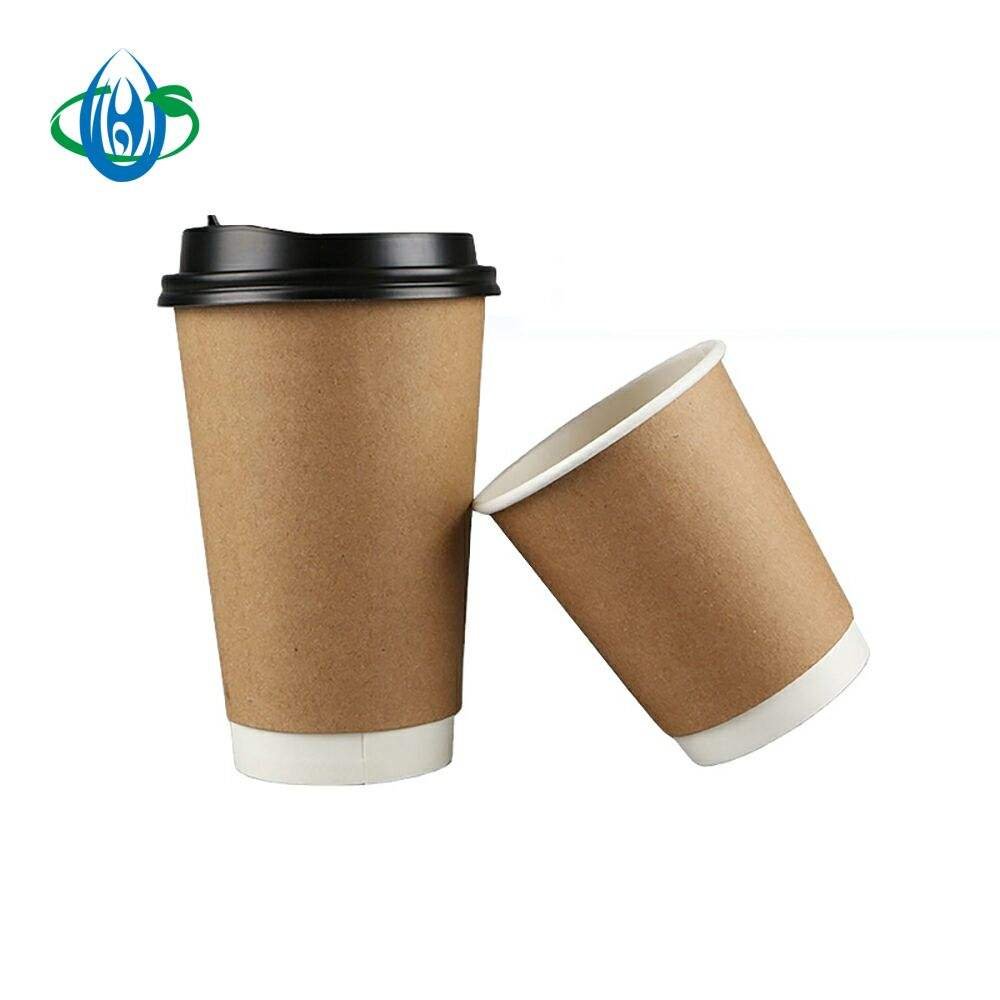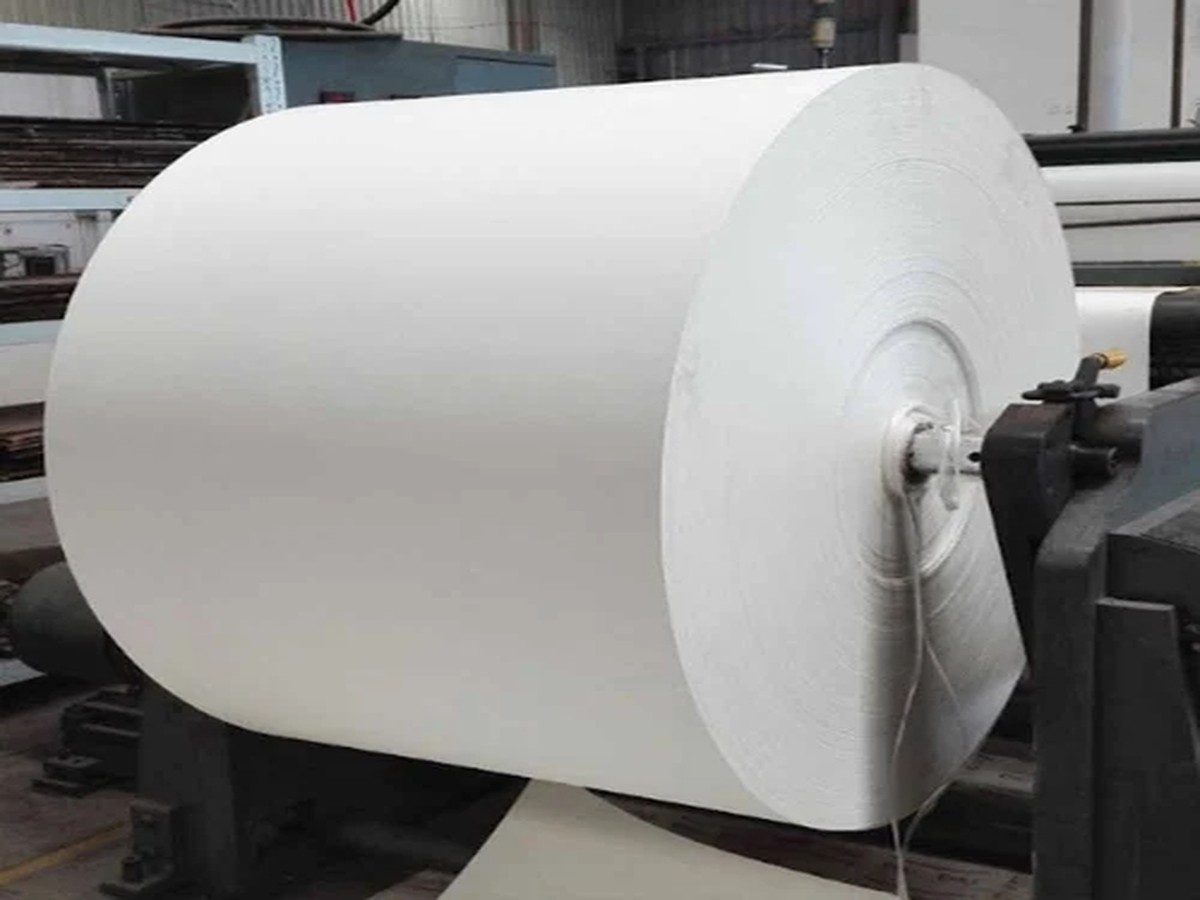
When people discuss paper packaging, they usually talk about the paper itself. But a paper cup, a food carton or a barrier-coated wrapper is never just paper. It is a material system — base paper, coatings, inks, adhesives and a conversion process — engineered to do a job while meeting safety, recycling and market rules.
With the EU Packaging and Packaging Waste Regulation (PPWR, Regulation (EU) 2025/40) becoming applicable from 12 August 2026, buyers across Europe are re-examining every layer of that system. This article explains how paper, coatings, printing and converting work together, and how suppliers can support EU-bound packaging with the right materials and documentation.
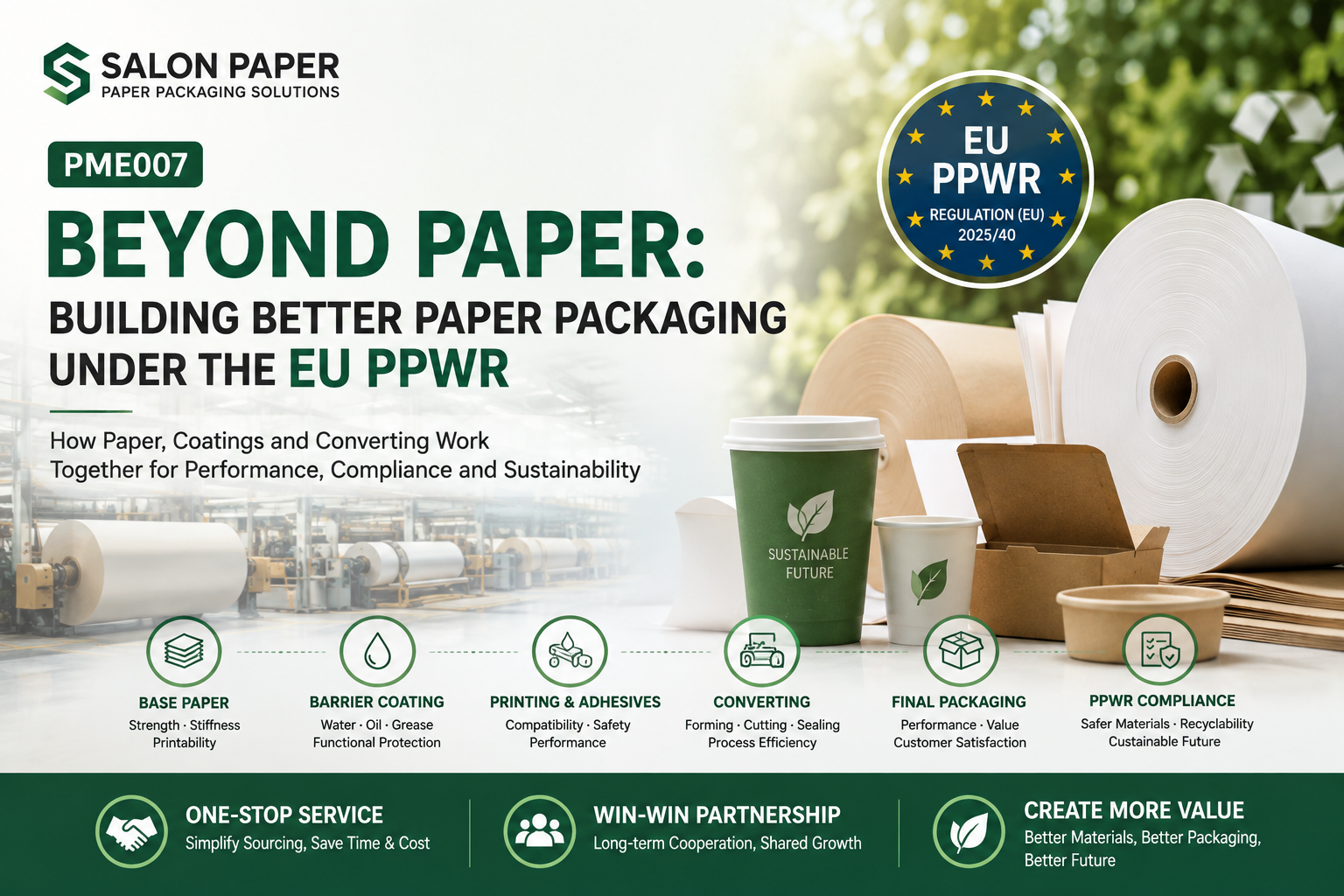
1. Packaging Is a Material System, Not Just Paper
The first step in building better packaging is changing how we look at it. A modern food paper cup is not only paper. Its performance and compliance may depend on several components:
- The base paper or board (strength, thickness, food-contact grade)
- A barrier coating (water-based, PLA, PE or other) that controls moisture and grease
- Printing inks and varnishes on the outer surface
- Adhesives used in side seams or bottom reels
- The conversion process itself (die-cutting, folding, sealing)
Each layer affects the final packaging. A supplier material report can support a compliance evaluation, but it does not automatically represent the compliance of the finished packaging. This is why the industry is moving from single test reports to complete documentation chains.
2. EU PPWR: The Compliance Backdrop
The PPWR is not just another certificate. It is a regulatory system covering the entire packaging life cycle — from design and material choice to recyclability, reuse, labelling and waste reduction. For exporters, the practical message is simple: European buyers now expect suppliers to provide a complete compliance system, not a single report.
Key areas that matter for paper packaging include:
- Restricted and regulated substances in materials
- Recyclability and design-for-recycling requirements
- Food-contact considerations where packaging touches food
- Traceability of material composition and testing scope
A "pass" result is meaningful only when the testing scope and method are clearly defined, and when the tested sample truly represents the final packaging structure.
3. Paper: The Foundation of the System
The base paper or board determines the mechanical performance of the packaging — stiffness, thickness, tear resistance and how cleanly it converts on high-speed lines. For EU-bound packaging, two considerations usually come first:
- Food-contact grade: base paper used for cups or food trays must be produced and handled as a food-contact material, with controlled fibres, additives and contaminants.
- Convertibility: consistent caliper, moisture and surface profile allow stable printing, coating and die-cutting, which directly affect yield and cost.
Common base materials include cupstock board for paper cups, kraft and coated duplex for cartons, and specialty boards for lids, sleeves and trays. The right paper reduces the burden on the coating layer and improves the recyclability of the final structure.
4. Barrier Coatings: Water-Based and Beyond
Barrier coatings are where paper packaging gains its protection against water, grease and oxygen. Water-based coatings have become increasingly popular because they support repulpability and reduce plastic content. However, "water-based" does not automatically mean compliant or recyclable — the specific formulation determines the result.
A coating solution needs to be evaluated from several angles:
- Food-contact suitability: does the coating meet the applicable food-contact rules for the intended use?
- Barrier performance: water, grease, oxygen and hot-fill resistance at the required level
- Recyclability: repulpability, de-inking behaviour and compatibility with paper recycling streams
- Processing: heat-sealability, adhesion and performance on converting lines
PLA, PE and other polymer coatings each have trade-offs between barrier strength, cost, heat-seal performance and recyclability. The choice depends on the application and the recyclability target, not on a single marketing label.
5. Printing, Inks and Adhesives: Hidden Variables
Printing is often overlooked in compliance discussions, yet it can introduce substances that matter for food contact and recycling. Inks, varnishes and coatings on the outer surface must be compatible with the food-contact system, and heavy-metal or restricted-substance limits apply.
Adhesives used in side seams, bottom reels and lamination are another hidden variable. An adhesive that performs well mechanically may still affect migration behaviour or recyclability. For a complete material declaration, buyers should expect documentation for every component layer:
Example: Paper + coating + ink + adhesive + final conversion process.
Different products require different focus — a plain cup, a printed food carton and a metallized luxury box have very different material stacks and therefore different documentation needs.
6. Converting: Where the System Comes Together
Converting is the step where individual materials become finished packaging. The way a cup is formed, a carton is folded or a lid is sealed can change the final properties — and the final compliance picture. Key points:
- Material changes, coating changes and process changes may require a compliance reassessment.
- The tested sample must represent the actual production structure, including seams, folds and printed areas.
- Heat-seal conditions affect barrier integrity and should be validated on production equipment.
This is why suppliers who control the full chain — from base paper to coated material to converting support — can give EU buyers the most reliable documentation.
7. Building a Traceable Compliance Chain
For paper packaging suppliers, the future challenge is creating traceable documentation. A practical compliance system should include:
- Full material composition and declarations for each layer
- Compliance statements with clearly defined testing scope and methods
- Restricted-substance information
- Recycling and recyclability data
- Version control so documents can be traced to specific batches
The goal is not collecting more certificates. The goal is making sure every document can answer: what was tested, how, and does it represent what we actually ship?
8. How Salon Paper Supports EU-Bound Packaging
At Salon Paper, we continue monitoring global packaging regulations and developing professional paper packaging solutions for international markets. Our solutions include:
- Cupstock board and food-contact paperboard for cups, trays and food packaging
- Barrier-coated paper with water-based and PLA options
- Metallized board, gold/silver card and holographic card for premium packaging
- Kraft, coated duplex and specialty boards for cartons and boxes
- Material documentation support for EU export compliance
Conclusion
Better paper packaging under the EU PPWR is built from a complete material system — not a single material. By understanding how paper, barrier coatings, printing, adhesives and converting interact, buyers and suppliers can make decisions that improve both compliance and cost.
- Design for the whole structure, not just the base paper
- Evaluate coatings on performance, food-contact and recyclability together
- Ask for documentation chains, not single reports
- Choose suppliers who control the full material chain
The future of paper packaging is moving from price competition to compliance and value competition. The materials you choose — and the documentation behind them — are the difference.
Talk to our team about cupstock, barrier-coated paper, metallized board and compliance documentation for EU export. Factory-direct from Ningbo, China.
Related Articles from Our Library
Ready to Get Started?
Looking for compliant paper packaging materials for the EU market? Visit www.salonpaper.com or contact us directly.
Contact Us for Samples